
“What Every Denver Homeowner Should Know About Backflow Prevention”
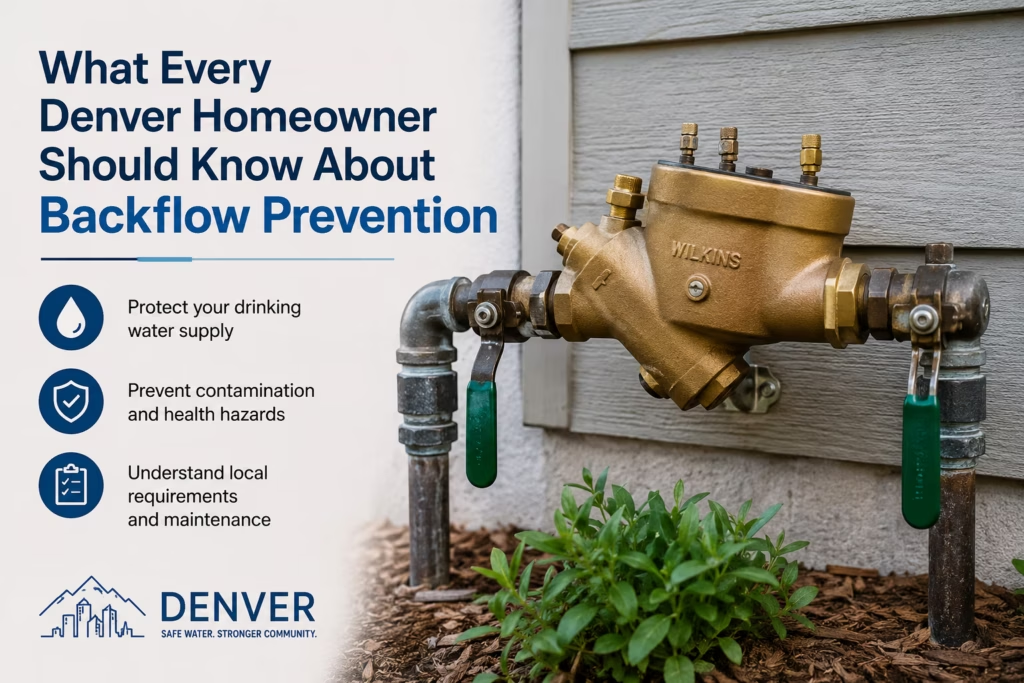
What Every Denver Homeowner Should Know About Backflow Prevention
Most homeowners in Denver never think about which direction the water in their pipes is flowing. And honestly, you shouldn’t have to — water is supposed to move from the city’s main line into your home, period. But when that flow reverses, even for a moment, the consequences can be serious: fertilizer, pesticides, bacteria, or worse can end up in the same water you use to brush your teeth and fill your kids’ glasses.
That reversal has a name. It’s called backflow, and preventing it is one of the most important — and most overlooked — parts of keeping your home’s water supply safe. If you have a sprinkler system, a well, or certain types of plumbing fixtures, Denver Water has specific rules you’re required to follow. This guide breaks down what backflow actually is, why it matters, what the city requires of you as a homeowner, and how to stay compliant without losing sleep over it.
What Is Backflow, Exactly?
Backflow is what happens when water in your plumbing system flows the wrong direction — back toward the public water main instead of away from it. Under normal conditions, pressure from the city’s water supply keeps everything moving in one direction: in. But several things can disrupt that pressure and cause water to reverse course.
There are two main types of backflow:
Back-siphonage happens when there’s a sudden drop in pressure in the city’s main line. Think of sipping through a straw — when pressure on one end decreases, liquid gets pulled backward. This can happen during a water main break, when the fire department draws heavily from a nearby hydrant, or during repairs to the public system.
Back-pressure happens when the pressure inside your home’s plumbing becomes higher than the pressure in the city’s supply line. This is more common in commercial buildings, but it can occur in residential settings with boilers, pumps, or certain irrigation setups.
Either way, the result is the same: water that should never touch your drinking supply suddenly has a path right into it.
Why This Matters More Than People Realize
Here’s the part that gets most homeowners’ attention. The water sitting in your garden hose, your sprinkler system, your hot tub, or your pool isn’t the same water that comes out of your kitchen faucet. It’s been exposed to dirt, lawn chemicals, animal waste, stagnant bacteria, chlorine treatments, and whatever else the environment throws at it. As long as water flows the right direction, none of that touches your drinking supply.
But during a backflow event, all of it can.
A common real-world scenario: a homeowner leaves a garden hose submerged in a bucket of soapy car-wash water. A fire hydrant down the street gets opened to fight a fire, dropping the pressure in the main line. Suddenly, the soapy water gets sucked backward through the hose, past the spigot, and into the home’s plumbing — and potentially into the public supply that serves the neighbors too.
That’s not a hypothetical. It’s exactly the kind of cross-connection that backflow prevention is designed to stop. And it’s why Denver Water — along with the Colorado Department of Public Health and Environment — takes this so seriously.
What Denver Water Requires of Homeowners
This is where things get specific to our area, and where a lot of homeowners get tripped up.
Denver Water operates under Colorado Regulation 11, Section 11.39 — the Backflow Prevention and Cross-Connection Control Rule, which sets the framework for the entire state. Locally, Denver Water enforces these rules through its Cross-Connection Control Program.
Here’s what that means for you as a single-family homeowner:
If You Have a Sprinkler or Irrigation System
This is the big one. If your home has an in-ground irrigation system, you are required to have an approved backflow prevention assembly installed on it. The most common type for residential irrigation is a pressure vacuum breaker (PVB), though some properties use a reduced pressure principle assembly (RP) depending on the setup.
That assembly has to be tested every single year. Denver Water sends out a testing reminder notice 30 days before the annual test is due, so keep an eye on your mail in the spring. The test must be performed by a certified backflow assembly tester — not just any handyman or general contractor.
If You Have an Auxiliary Water Supply
Denver Water surveys single-family residential water service lines that have an auxiliary water supply, such as a well or pond. If your property falls into this category, you’ll need backflow prevention installed and tested annually.
If You Have a Fire Sprinkler System
Homes with internal fire suppression systems typically need a backflow preventer on that line as well. The requirements here are a little different — fire line assemblies require additional certification, so make sure whoever you hire is qualified for that specific work.
What Happens If You Don’t Comply
This is the part nobody likes to talk about, but it’s important. All backflow assemblies are required to be installed or tested annually, and Denver Water requires this to be completed within 60 days. After three mailed notification letters go unanswered, the service goes into suspension status and a $250 penalty is assessed.
Translation: ignore the reminder letters, and you can lose your water service and get fined. It’s avoidable, but only if you act when the notice arrives.
Who’s Allowed to Test Your Backflow Device?
This rule changed recently, so even if you’ve owned your home for a while, the answer may not be what you remember.
In 2025, Colorado passed HB25-1077, which allows certified backflow assembly testers to test, inspect, and repair backflow assemblies without holding a separate plumbing license. Domestic and irrigation backflow assemblies can be tested, inspected, and repaired by a certified tester who holds either an ABPA or ASSE certification.
What you should look for when hiring:
- ABPA certification (American Backflow Prevention Association), or
- ASSE certification (American Society of Sanitary Engineers) — specifically ASSE 5110 for testers
Ask before you hire. A reputable plumbing company will have these certifications listed on their website or be happy to show you the credentials. If someone hesitates or can’t tell you which certification they hold, keep looking. Denver Water won’t accept test reports from uncertified testers, and you’ll be right back where you started.
One more thing: the test report has to be submitted to Denver Water — not just left on your kitchen counter. Most professional plumbing companies handle this submission for you as part of the service. Confirm that’s the case before you book.
How the Testing Process Actually Works
If you’ve never been around for a backflow test, it’s not a big production. A certified tester arrives with a specialized gauge kit, isolates your backflow assembly using its built-in shutoff valves, and connects the gauge to a series of test cocks on the device.
From there, they’re checking a few specific things:
- That the check valves inside the assembly close completely under reverse pressure
- That the relief valve opens at the correct pressure threshold (on RP assemblies)
- That all shutoff valves are operating properly
- That there are no leaks or signs of internal failure
The whole thing usually takes 20 to 45 minutes for a typical residential setup. If the device passes, the tester fills out the report, tags the assembly with the date and their certification info, and submits the paperwork to Denver Water. If it fails, you’ll need to repair or replace the assembly and have it retested before the deadline.
Where Backflow Devices Should Be Installed
Installation matters. A backflow assembly that’s installed incorrectly might pass a test the first time and still fail to protect your water when it counts.
Denver Water requires backflow assemblies to be installed a minimum of 12 inches off the floor and 12 inches away from a wall. If the assembly is installed higher than 5 feet off the ground, a platform is required for access and maintenance. Adequate drainage is required, as there is a potential for discharge from the unit, and the assembly must be protected from freezing.
That last point is huge in Denver. Our winters can be brutal, and a frozen backflow assembly is a cracked backflow assembly. If your device is outside or in an unheated area, it needs to be properly winterized every fall — the system blown out, the device drained, and ideally an insulated cover installed. Skipping this step is one of the most common reasons homeowners end up needing expensive emergency repairs in the spring.
Common Backflow Mistakes Denver Homeowners Make
Over the years, the same handful of mistakes come up again and again. Here are the ones worth avoiding:
Leaving the garden hose submerged. Whether it’s filling a kiddie pool, soaking a bucket, or topping off the dog’s water bowl outside, submerging a hose creates a cross-connection. Always leave an air gap, and consider adding a hose bib vacuum breaker (a cheap brass fitting that screws onto your outdoor spigot) for extra protection.
Ignoring the annual reminder letter. It feels like junk mail. It isn’t. Open it when it arrives and schedule the test the same week.
Hiring whoever’s cheapest without checking credentials. A $40 difference isn’t worth a rejected test report and a non-compliance penalty.
Skipping winterization. A blown-out irrigation system in October costs a fraction of a replaced backflow assembly in April.
Assuming the previous owner handled it. When you buy a home with an existing irrigation system, the responsibility transfers to you immediately. Pull up the property’s testing history with Denver Water if you’re not sure where things stand.
When to Call a Plumber (Beyond Annual Testing)
Most years, the only backflow-related call you’ll need to make is to schedule your annual test. But there are a few situations that warrant immediate attention:
- You notice discolored water, unusual taste, or odd smells from your tap
- Your water pressure drops suddenly or fluctuates noticeably
- You see water discharging from your backflow assembly’s relief valve
- You’re installing a new irrigation system, well, or pool
- You bought a home and don’t know the device’s testing history
- Your assembly is visibly damaged, leaking, or appears frozen
Any of these can indicate either an active problem or a developing one. Catching it early is always cheaper than fixing it after it fails.
The Bottom Line for Denver Homeowners
Backflow prevention isn’t glamorous, and most of the time you’ll never think about the small brass assembly sitting near your irrigation system. That’s exactly how it should be. When it’s working, you don’t notice. When it’s not — or when you skip the annual test — that’s when the headaches start.
The whole system Denver Water has built around backflow prevention exists for a simple reason: to keep contaminated water out of the drinking supply that you, your neighbors, and the entire metro area share. Annual testing is a small ask in exchange for that, and the penalties for ignoring it are entirely avoidable.
If it’s been more than a year since your last test, if you just moved into a home with an irrigation system, or if that reminder letter is sitting on your counter right now — give us a call. We’re certified, we handle the paperwork submission to Denver Water for you, and we’ll get you back in compliance before any letters or penalties show up.
Your water is too important to leave to chance. Let’s make sure it keeps flowing the right direction.