Sewer Repair in Denver: Why Trenchless Is Changing How Homeowners Fix Their Sewer Lines
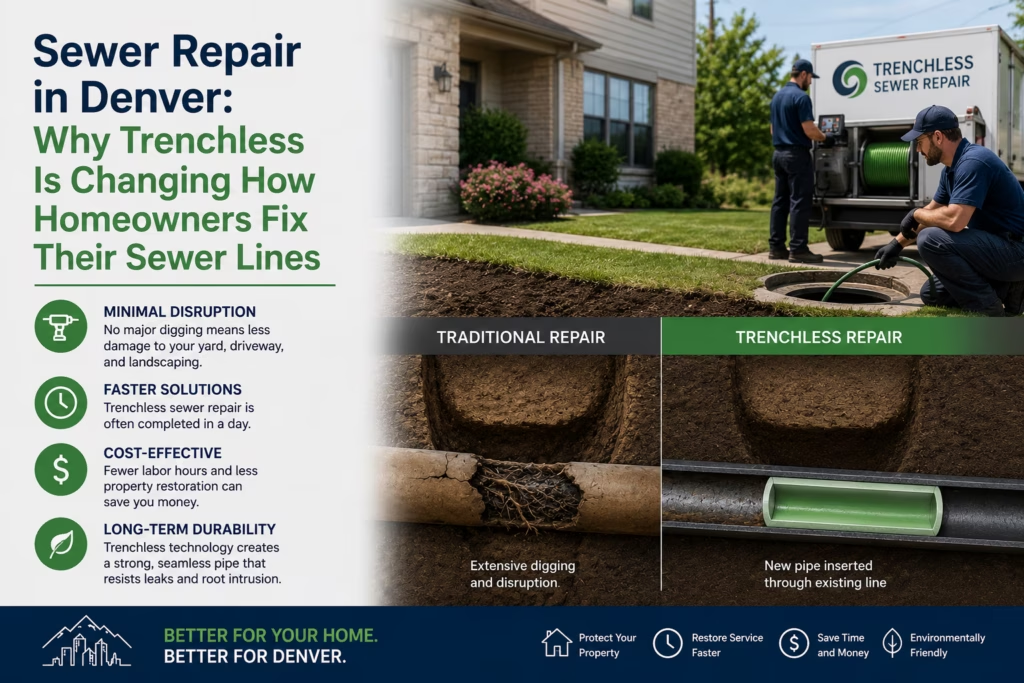
For most Denver homeowners, “sewer repair” used to mean one thing: a backhoe tearing up your front yard, a trench running from your house to the street, and a bill big enough to make you wince. If you’re lucky, the work took a few days. If you weren’t, it took a week — and once the digging was done, you still had to pay someone to put your landscaping, driveway, or sidewalk back together.
That’s changed. Over the last decade, trenchless sewer repair has gone from a niche option to the preferred method for most residential sewer line repairs in Denver. Instead of excavating the entire line, plumbers can now rehabilitate or fully replace a damaged sewer line through two small access points — no trench, no destroyed yard, and in most cases, the work is done in a single day.
But here’s the catch: trenchless isn’t always the right answer, and not every plumber is qualified to do it well. This guide walks you through how to recognize the signs of a failing sewer line, what’s actually causing it under Denver soil, how trenchless methods work, when traditional excavation is still the better call, and what to expect in terms of cost and permits in 2026.
How to Tell Your Sewer Line Is in Trouble
Sewer line problems almost never appear out of nowhere. They build up gradually, and most homeowners ignore the early warnings until the basement floor drain is overflowing on a Sunday night.
Here’s what to watch for.
Multiple Drains Slow at the Same Time
This is the single most reliable warning sign. If only your kitchen sink is slow, you probably have a localized clog. But when the kitchen, bathroom, shower, and laundry are all draining sluggishly within the same week, the problem isn’t at any individual fixture — it’s in the main line that connects all of them to the city sewer.
Gurgling Toilets and Floor Drains
Air trapped behind a partial blockage has to go somewhere. When you flush a toilet and hear glugging from a nearby drain, or when running the washing machine causes bubbling in the basement floor drain, that’s air working its way past an obstruction. It’s your sewer line telling you something is brewing.
Sewage Backups in the Basement
The lowest drain in your home is almost always the first to back up when the main line clogs. A floor drain that fills with dirty water during a normal day of household use is a serious warning. Don’t wait. By the time sewage is on the floor, the blockage is significant.
Sewer Odors Inside or Outside the House
A healthy sewer system doesn’t produce noticeable smells. If you’re getting sewer gas inside the home, or whiffs of something foul in the yard around the sewer line’s path, the line is leaking somewhere. That smell is raw sewage escaping into the soil.
Unexplained Yard Changes
Patches of grass that are unusually green and lush. Soft, soggy spots in the lawn even during dry weather. Indentations or small sinkholes forming along the path between your house and the street. These are all signs that sewage is leaking from a damaged pipe and saturating the soil — feeding the grass and eroding the ground below.
Recurring Clogs That Keep Coming Back
If you’ve had a plumber out three times in six months to clear the same line, the clog isn’t the real problem. Standard drain cleaning gives you temporary relief, but if roots, scale, or a structural defect is causing the blockage to return, you need a camera inspection to find out what’s actually happening underground.
Why Denver Sewer Lines Fail
Denver’s soil and climate are uniquely hostile to underground pipes. A sewer line that might last 80 years in a milder environment can fail in 40 to 50 here, and there are specific reasons for it.
Bentonite clay soil. The Front Range sits on expansive bentonite clay that swells dramatically when wet and contracts when dry. With every spring snowmelt and every dry stretch, the soil around your underground sewer line shifts — slowly pulling pipe joints apart, creating low spots where sewage pools, and opening cracks for roots to find.
The 60-inch frost line. Denver building codes require sewer lines to be buried below the 60-inch frost line, which is deeper than in many other parts of the country. That depth protects against freezing, but it also means any repair work is more involved — and more expensive when you have to excavate the traditional way.
Tree roots. Mature trees throughout Denver are constantly searching for moisture. Once they find even a hairline crack in your sewer line, the roots grow into the pipe, expand, and eventually fill it. Older neighborhoods with established tree canopies — Washington Park, Park Hill, Congress Park, Wash Park, Capitol Hill — see this constantly.
Aging pipe materials. If your home was built before the 1980s, your sewer line is probably one of three materials that are now reaching the end of their lifespan:
- Clay tile — common in homes from the late 1800s through the 1940s. Brittle, joint-heavy, and extremely vulnerable to root intrusion.
- Cast iron — used heavily from the 1920s through the 1970s. Corrodes from the inside out, eventually thinning to the point of collapse.
- Orangeburg pipe — a tar-paper-and-wood-fiber pipe used in suburban developments from the 1940s through the early 1970s. It deteriorates, deforms, and ultimately collapses. If you have it, you’ll need to replace it — there’s no saving it.
Freeze-thaw cycles. Denver routinely sees 30-40 degree temperature swings between sunrise and sunset. That constant freezing and thawing stresses pipe joints and accelerates the failure of any line that’s already compromised.
Add it all up, and you can see why sewer repair in Denver is so common — and why doing it right the first time matters.
What Trenchless Sewer Repair Actually Is
Trenchless sewer repair is exactly what it sounds like: a way to repair or replace your sewer line without digging a trench across your yard. Instead of excavating the entire pipe, the plumber digs two small access points — one near the house and one near where the line meets the city main — and works through the existing pipe to fix the problem.
There are two main trenchless methods, and they’re used in different situations.
CIPP Pipe Lining (Cured-in-Place Pipe)
Pipe lining creates a new pipe inside your old one. Here’s how it works: the plumber starts by cleaning out your existing sewer line with hydro jetting to remove all the buildup, roots, and debris. Then a flexible liner coated with epoxy resin is inserted through the existing pipe and inflated. As it cures — using either hot water, steam, or UV light — the resin hardens into a smooth, seamless new pipe that’s bonded to the inside of the old one.
The result is essentially a brand-new pipe with no joints, no gaps for roots to penetrate, and a smoother interior than the original. CIPP lining typically lasts 50+ years and comes with warranties to match.
When CIPP lining is the right choice:
- The existing pipe is intact but cracked, leaking, or full of roots
- You want to extend the life of the line without replacing it entirely
- The line runs under hardscape (driveways, patios, sidewalks) you don’t want to dig up
- You want the work done in a single day with minimal disruption
When it’s not the right choice:
- The pipe has completely collapsed or has major sections missing
- The line has severe belly (sagging) that needs to be corrected by re-grading
- The diameter of the existing pipe is too small to accommodate the liner
Pipe Bursting
Pipe bursting is the more aggressive trenchless option, used when the existing pipe is too damaged for lining. The plumber threads a steel cable through the old pipe and attaches a cone-shaped bursting head to it. As the cable is pulled back through, the bursting head fractures the old pipe outward into the surrounding soil while simultaneously pulling a brand-new HDPE (high-density polyethylene) pipe into place behind it.
The result is a completely new sewer line — same path, same connections — but made of modern, seamless HDPE that’s stronger than the original and highly resistant to roots, corrosion, and ground movement.
When pipe bursting is the right choice:
- The existing pipe is severely damaged, collapsed, or made of Orangeburg
- You need a full replacement, not just a repair
- The line runs under landscaping, driveways, or other features you want to preserve
- You want a new pipe that will likely outlast the house
When it’s not the right choice:
- The line has significant grade problems that need correction
- There are major obstacles in the pipe path (utility crossings, foundation conflicts)
- The existing pipe is already collapsed in ways that block the bursting head from passing through
When You Still Need Traditional Excavation
Trenchless isn’t magic, and there are situations where the old-school method is still the right call:
- Severe belly or sag in the line that needs to be corrected by re-grading the pipe path
- Collapsed sections that prevent access to thread the lining or bursting equipment through
- Pipe path changes — if the new line needs to be rerouted or moved
- Connection point problems at the city main that require open excavation to address
- Some shallow lines where the depth doesn’t justify the cost of trenchless equipment
A good plumber will tell you honestly when trenchless isn’t the right fit instead of forcing it just to charge more. If the only way to fix the problem correctly is with excavation, that’s what needs to happen.
What It Costs in Denver (2026 Numbers)
Sewer repair pricing in Denver varies more than almost any other plumbing service, because it depends on the length of your line, the depth, the method, and what permits are required. Here’s a realistic snapshot of 2026 ranges.
Traditional excavation: Roughly $150 to $250 per linear foot, with total project costs typically running $5,000 to $15,000 for a standard residential lateral.
CIPP pipe lining: Roughly $80 to $250 per linear foot, with most full-line lining projects landing between $4,500 and $12,000.
Pipe bursting: Roughly $160 to $300 per linear foot, with most full replacements running $6,000 to $15,000.
Permits and city fees: Denver requires a Sewer Use and Drainage Permit (SUDP) for all main line replacements. Permit fees typically start around $55, but if the repair extends into the public right-of-way (the street or sidewalk), additional encroachment permits and bonds can add $1,000 to $3,000. Budget $400 to $1,000 in standard permit and inspection costs for a typical single-family job, more if the project touches the right-of-way.
A few things to keep in mind: Denver’s deep frost line adds depth to every project, which adds cost. And the city’s strict permitting and inspection requirements mean you absolutely want a licensed contractor who knows the local code — not a handyman or someone working without permits.
Red Flags When Hiring a Sewer Contractor
This is the part nobody tells you, but it’s the most important section of this guide. Sewer repair is one of the most commonly overcharged services in plumbing, and there are some specific warning signs to watch for.
The “it can’t wait until tomorrow” push. Sewer lines rarely fail catastrophically without any warning. If a plumber is telling you that you absolutely have to replace your line right now, today, or the world ends — get a second opinion. High-pressure sales tactics are almost always a sign that something is off.
No camera inspection before quoting a major repair. Any reputable plumber will run a camera through your line before recommending replacement. If someone wants to bid you $10,000 in work without showing you video of what’s actually wrong, walk away.
No mention of permits. All main line work in Denver requires permits and inspections. If a contractor is suggesting you skip the permit to save money, they’re putting you at risk — both legally and in terms of work quality.
No written warranty. Trenchless work should come with a substantial warranty (often 25-50 years on the pipe itself). Get it in writing.
Wildly low estimates. If one bid comes in dramatically below the others, ask hard questions about what’s actually included. Often the cheap bid skips restoration work, leaves out permits, or uses inferior materials.
When to Schedule a Sewer Camera Inspection
Even if you’re not dealing with an active problem, there are situations where a camera inspection is one of the smartest investments you can make:
- Buying a home in Denver, especially anything built before 1980. A sewer scope inspection runs $250-500 and can save you from inheriting a $15,000 problem.
- You have mature trees within 20 feet of the sewer line path. Annual or biennial inspections can catch root intrusion before it becomes a blockage.
- Recurring clogs in the main line. Don’t just keep paying to have it snaked. Find out what’s actually wrong.
- You’re remodeling and adding fixtures. Make sure the existing line can handle the additional load before you spend money on a new bathroom.
The Bottom Line for Denver Homeowners
Your sewer line is one of the most important systems in your home — and also one of the most ignored, right up until the moment it fails. The good news is that you don’t have to choose between living with a failing line and destroying your yard to fix it. Trenchless technology has changed the math entirely.
If you’re seeing warning signs — slow drains across multiple fixtures, gurgling toilets, sewage smells, soggy spots in the yard — get a camera inspection before the problem turns into an emergency. Most repairs are far cheaper and less disruptive when you catch them early.
And if a contractor has already told you that you need a full replacement, get a second opinion before you sign anything. Ask whether trenchless is an option. Ask to see the camera footage. Ask about warranties. Ask about permits. The right plumber will welcome those questions — the wrong one will pressure you to move fast and not think too hard about it.
Your sewer line is going to last a lot longer if you treat it like the major piece of infrastructure it is.